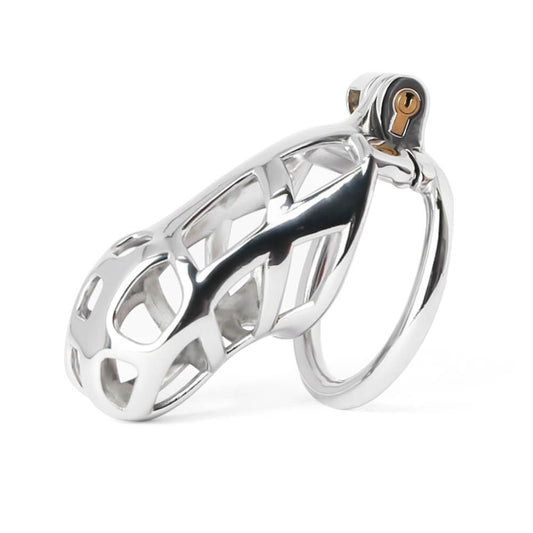


Finishing Locktober does not mean you need to lock again on November 1. After 31 days of repeated wear, cleaning, adjustment, and communication, the useful next step is a review. Give the body time without the device, clean every component, inspect the skin, and talk honestly about what worked. A completion streak is less valuable than the information you collected along the way.
The Locktober guide helps plan the challenge; after it ends, use the same categories to evaluate the result. The Locktober collection remains useful as a comparison library, but do not buy an upgrade until you can name the problem it should solve.
First: Unlock, Clean and Check
Remove the cage, disassemble it, and wash and dry every component according to its material and instructions. Check the base-ring area, underside, lock contact points, hinges, bars, and any place that felt different during the final week. Persistent redness, broken skin, swelling, pain, unusual discharge, numbness, or other significant concerns deserve rest and qualified medical advice rather than an immediate new challenge.
Even when the skin looks normal, take a break long enough to understand what “normal” feels like again. Do not use a day-31 reward or partner expectation to override discomfort.
Review the Month Like a Product Test
Look through notes, messages, cleaning schedules, and unlocks. Which days produced rubbing? Did weight become noticeable after several hours? Could you clean and dry the device without rushing? Was the cage quiet and discreet at work? Did sleep improve after changing a ring or support garment? Did app control add connection or mostly maintenance?
Separate fit problems from rule problems. If the device was comfortable but the challenge felt exhausting, a different rule schedule may help more than a new cage. If the relationship communication was good but the ring repeatedly caused pressure, the upgrade should focus on fit or structure.
Five Upgrade Paths Based on Real Locktober Experience
Beginner to Comfort Upgrade: Soft Rubber Cobra to Breathable Flat Steel
If a first month in the Soft Rubber Cobra Chastity Discreet confirmed your measurements but flexible material moved more than you liked, the next step might be a more structured design. Do not upgrade merely because steel feels advanced. First decide whether you want less movement, more open cleaning access, or a flatter profile.

Traditional Cage to Flat Cage: Breathable Flat Stainless Steel
The Breathable Flat Stainless Steel Chastity Cage is a logical comparison when projection under clothing and cleaning access were the main complaints. It uses a wireframe front and 40, 45, or 50 mm rings. Flat pressure and metal weight are new variables, so restart the one-hour, half-day, work, cleaning, and sleep tests rather than transferring the old schedule immediately.

More Open Flat Structure: Stainless Steel StarNet
If the month showed that ventilation and visual cleaning access matter most, the Stainless Steel StarNet Flat Chastity Cage provides a mesh-style front plus flat or arc ring choices in 40, 45, and 50 mm. Choose between ring shapes based on previous pressure notes, not appearance. Avoid assuming the open design will have the same weight or feel as resin.

Resin to Premium Metal: Primary Stainless Steel MAMBA
The Primary Stainless Steel MAMBA Chastity Cage offers several cage lengths and ring sizes, making it a measured upgrade path for someone who learned exact dimensions in resin. Metal introduces more weight and a different temperature and support experience. It suits a wearer who wants those qualities—not someone trying to prove progression by choosing the heaviest or smallest combination.

Solo Challenge to Smart Control: QIUI CAG·INK Pro
If solo rules worked physically but you and a partner want more remote participation, the QIUI CAG·INK Pro Cellmate 3 adds cellular, Bluetooth, and remote-control paths. This is not only a cage upgrade; it adds accounts, charging, connectivity, privacy, and emergency procedures. Avoid it if the month already showed that technical maintenance reduces enjoyment.

Talk About the Next Challenge
Partners should review consent, control, teasing, cleaning unlocks, check-in frequency, privacy, photos, travel, and what felt emotionally useful or burdensome. Ask what each person wants to repeat, change, or remove. A successful month does not create permanent consent for a stricter rule set.
For solo play, record the same answers. Note the maximum session that felt routine, the point where cleaning became difficult, and every reason you unlocked. Those notes are better buying evidence than a generic “advanced” label.
Do You Need a New Cage at All?
If the current device fit well, stayed clean, worked under clothing, and supported the rules, the answer may be no. Replacement makes sense when a verified problem has a clear solution: a better ring range, lower profile, less weight, more cleaning access, or a control method both partners want.
Turn the Review into an Upgrade Brief
Write one sentence for each problem before shopping. “The cage pulled after two hours of walking” points toward weight, support, or length. “Cleaning took too long” points toward a more open structure. “The padlock showed under clothing” points toward profile and lock placement. “Remote rules were difficult to coordinate” may support smart control—or simply a better schedule.
Then add a requirement that can be checked on a Product page: a specific ring range, a shorter measured length, an open front, resin instead of steel, an integrated lock, or a documented emergency release. If the next device does not meet that requirement, it is not an upgrade for your problem, regardless of price.
Use our planned 10-option Locktober comparison to match that problem to a category. The best post-Locktober purchase is not a trophy. It is a more informed fit for the way you actually live and play.