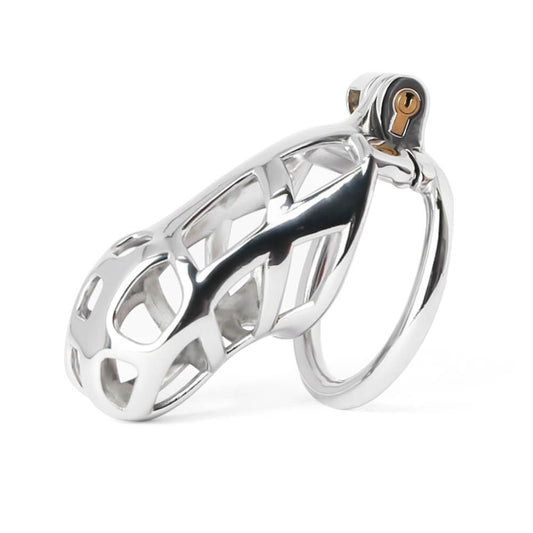


Ein Keuschheitskäfig, der nicht passt, ist ein Rezept für Frustration – oder schlimmer noch, Verletzungen. Zu eng und Sie riskieren Durchblutungsstörungen, Scheuern und sogar Hautschäden. Zu locker und der Käfig kann verrutschen, seinen Zweck verfehlen oder ein unangenehmes Verschieben verursachen. Egal, ob Sie neu in der Keuschheit sind oder ein Upgrade suchen, die richtige Größe zu finden, ist der wichtigste Schritt für ein sicheres und angenehmes Erlebnis.
Die gute Nachricht? Die Größenbestimmung ist unkompliziert. Mit einem weichen Maßband, 10 Minuten Ihrer Zeit und der folgenden Anleitung wissen Sie genau, welche Käfiggröße Sie bestellen müssen. Legen wir los.
Benötigte Werkzeuge
- Weiches Stoffmaßband (oder ein Stück Schnur und ein Lineal)
- Ein Spiegel (hilft bei der Überprüfung des Sitzes)
- Stift und Papier zum Notieren der Maße
- Zeit zum Messen, wenn Sie völlig entspannt und schlaff sind
Tipp: Messen Sie zu verschiedenen Tageszeiten. Körpertemperatur, Stress und Aktivität können die schlaffe Größe beeinflussen. Mehrere Messungen ergeben einen genaueren Durchschnitt.
Schritt 1: Messen des Basisrings
Der Basisring sitzt hinter dem Hodensack, um die Penisbasis herum. Er ist der Anker des gesamten Geräts.
So messen Sie:
Legen Sie das Maßband um die Basis des Penis und des Hodensacks und ziehen Sie es fest, aber nicht zu straff. Das Band sollte in der Falte sitzen, wo Ihr Körper auf Ihren Hodensack trifft. Notieren Sie den Umfang in Millimetern.
In Durchmesser umrechnen:
Teilen Sie den Umfang durch 3,14 (π). Zum Beispiel ergibt ein Umfang von 150 mm einen Durchmesser von ungefähr 48 mm. Standardringgrößen sind normalerweise 40 mm, 45 mm, 50 mm, 55 mm und 60 mm. Wählen Sie die nächstgelegene Größe – wenn Sie zwischen zwei Größen liegen, wählen Sie die größere für mehr Komfort.
Der Fingerspitzentest:
Sobald Sie einen Ring haben (oder probieren Sie es mit einem ähnlich großen Ring oder einem zu einer Schlaufe gebundenen Stück Schnur), sollten Sie in der Lage sein, eine Fingerspitze zwischen den Ring und Ihren Körper zu stecken, wenn der Ring sitzt.
- Zu eng: Keine Fingerspitze passt → Gefahr von Durchblutungsstörungen
- Zu locker: Fingerspitze gleitet leicht mit Spielraum → Gefahr des Hodenentweichens
Gängige Ringgrößen und wann man sie wählt:
| Ringdurchmesser | Am besten für |
|---|---|
| 40 mm (1,57") | Kleinerer Rahmen, engerer Sitz |
| 45 mm (1,77") | Häufigste Anfangsgröße |
| 50 mm (1,97") | Durchschnittlicher bis größerer Bau |
| 55 mm (2,17") | Größerer Bau oder zusätzlicher Komfort |
| 60 mm (2,36") | Breiter Körpertyp oder wenn 55 mm eng anfühlt |
Interner Link: Viele unserer Käfige werden mit mehreren Ringgrößen geliefert. Das Cobra 6.0 Male Chastity Device enthält vier Basisringe, damit Sie die Passform genau einstellen können. Der Soft Chastity Cage Silicone wird ebenfalls mit vier Ringen geliefert – perfekt für Anfänger.
Schritt 2: Messen der Käfiglänge
Die Käfiglänge wird von der Basis des Rings (wo er auf den Käfig trifft) bis zur Spitze des schlaffen Penis gemessen.
So messen Sie:
Stehen Sie entspannt. Drücken Sie ein Lineal sanft gegen Ihr Schambein (wo der Ring sitzen würde) und messen Sie bis zur Penisspitze. Verwenden Sie den kleinsten Wert, den Sie bei mehreren Versuchen erhalten.
Faustregel:
Wählen Sie einen Käfig, der 5–10 mm (0,2–0,4 Zoll) kürzer ist als Ihre schlaffe Länge.
Warum kürzer besser ist:
- Verhindert schmerzhafte Teilerrektionen, die versuchen, den Käfig nach vorne zu schieben
- Hält die Harnröhre auf das Käfigloch ausgerichtet, was das Urinieren erleichtert
- Verringert die Gefahr, dass der Käfig verrutscht und Scheuern verursacht
Wenn Sie zwischen zwei Größen liegen, entscheiden Sie sich für den kürzeren Käfig. Eine leicht eng anliegende Passform ist für langfristiges Tragen viel bequemer als ein zu langer Käfig.
Gängige Käfiglängen und ihre Bedeutung:
| Käfiglänge | Stil / Verwendungszweck |
|---|---|
| < 30 mm | Mikro- / Flach- / Inverted-Käfige (maximale Verweigerung) |
| 30–50 mm | Sehr kurz – oft für extreme Einschränkung oder Sissy-Spiele verwendet |
| 50–70 mm | Kurz – für die meisten bequem, gut für Langzeitgebrauch |
| 70–90 mm | Durchschnittlich – klassische Passform, passt den meisten Anatomien |
| > 90 mm | Lang – nur für Personen mit längerer Schlafflänge |
Interner Link: Der Cobra 6.0 ist in fünf Längen von Micro (52 mm) bis Max (100 mm) erhältlich. Der Primary Stainless Steel MAMBA Chastity Cage ist ebenfalls in fünf Größen (XS bis XL) erhältlich, was es einfach macht, Ihre Messung genau anzupassen.
Schritt 3: Messen des Käfigdurchmessers (Innenbreite)
Der Durchmesser bezieht sich auf die Innenbreite des Käfigrohrs. Zu eng und Sie werden einklemmen; zu weit und der Penis kann verrutschen, was zu Scheuern führt.
So messen Sie:
Messen Sie die Breite (nicht den Umfang) Ihres schlaffen Penis an seiner breitesten Stelle. Verwenden Sie ein Lineal und messen Sie gerade über.
Passformziel:
Der Käfig sollte etwas schmaler sein als Ihre schlaffe Breite, um einen sanften Kontakt zu erzeugen. Dies hält alles an Ort und Stelle, ohne zu komprimieren.
Typische Durchmesser:
| Innenbreite | Am besten für |
|---|---|
| 33 mm | Schmaler Umfang |
| 35–37 mm | Durchschnittlicher Umfang |
| 38 mm+ | Breiterer Umfang |
Offene Designs wie die Cobra-Serie oder Kettenkäfige sind hinsichtlich des Umfangs nachgiebiger, da sie flexible oder offene Strukturen haben.
Interner Link: Wenn Sie eine nachgiebigere Passform bevorzugen, passt sich der Verstellbare Kettenkäfig Ihrer Anatomie an, während das offene Design des Cobra 6.0 gut für eine Reihe von Umfängen geeignet ist.
Schritt 4: Überprüfen des Spalts (Abstand Ring-zu-Käfig)
Der Spalt ist der Raum zwischen dem Basisring und dem Käfig. Er wird oft übersehen, ist aber sowohl für die Sicherheit als auch für den Komfort entscheidend.
Warum es wichtig ist:
- Zu klein: Der Spalt kann die Haut einklemmen, insbesondere den Hodensack.
- Zu groß: Ein Hoden kann durchrutschen (ein schmerzhaftes und überraschendes Ereignis).
So überprüfen Sie:
Wenn der Käfig zusammengebaut und getragen wird, sollte der Spalt gerade so groß sein, dass die Haut bequem sitzt, ohne komprimiert zu werden. Als Faustregel gilt, dass der Spalt normalerweise zwischen 8 und 12 mm liegt, dies variiert jedoch je nach Anatomie.
Was zu tun ist:
Wenn Sie ein Einklemmen erleben, versuchen Sie eine andere Ringgröße oder einen Käfig mit einem leicht anderen Winkel. Einige Käfige, wie der Innie Cock Cage, haben ein Design, das Spaltprobleme ganz minimiert.
Schritt 5: Überprüfung durch Probetragen
Die Größenbestimmung endet nicht mit Zahlen. Selbst die besten Messungen können nicht berücksichtigen, wie Ihr Körper unter realen Bedingungen reagiert.
Testprotokoll:
- Tragen Sie den Käfig 1–2 Stunden lang im Sitzen, Stehen und Gehen.
- Überprüfen Sie auf:
- Verfärbung (blaue oder violette Haut)
- Taubheitsgefühl oder Kribbeln
- Stechende Schmerzen irgendwo
- Wundscheuerstellen um den Ring herum
- Wenn eine davon auftritt, sofort entfernen und die Größe neu bewerten.
Nächste Schritte:
Wenn der Test gut verläuft, erhöhen Sie allmählich die Tragezeit. Viele Benutzer stellen fest, dass sich ihr Körper nach einigen Tagen anpasst. Wenn die Probleme weiterhin bestehen, zögern Sie nicht, eine andere Ringgröße oder einen anderen Käfigstil auszuprobieren.
Häufige Fehler bei der Größenbestimmung und wie man sie vermeidet
| Fehler | Warum es passiert | Lösung |
|---|---|---|
| Ring zu eng | Zu aggressives Messen oder die Wahl eines kleineren Rings in dem Glauben, er sei „sicherer“ | Verwenden Sie den Fingerspitzentest. Sicherheit kommt von der Passform, nicht von der Enge. |
| Ring zu locker | Angst vor Unbehagen; Bewegung nicht berücksichtigen | Wenn der Ring leicht rotiert oder die Hoden herausrutschen, verkleinern Sie die Größe. |
| Käfig zu lang | Messen der eregierten Länge anstelle der schlaffen Länge | Immer im schlaffen Zustand messen und kürzer wählen. |
| Käfig zu schmal | Nicht Messen des Durchmessers | Breite messen; offene Designs in Betracht ziehen, wenn man zwischen zwei Größen liegt. |
| Den Spalt ignorieren | Nicht Berücksichtigen des Winkels zwischen Ring und Käfig | Ringgröße anpassen oder ein anderes Käfigmodell ausprobieren. |
Produktempfehlungen basierend auf Ihren Maßen
| Ihr Messprofil | Empfohlener Käfigtyp | Beispielprodukt |
|---|---|---|
| Benötigen Sie mehrere Ringgrößen | Käfig mit 3–6 Ringoptionen | Cobra 6.0, Soft Chastity Cage Silicone |
| Wünschen Sie eine präzise Länge | Käfig in mehreren Längen erhältlich | Cobra 6.0 (5 Längen), MAMBA (5 Längen) |
| Benötigen Sie einen großen Durchmesser oder Komfort | Offenes Design, Silikon oder Kettengeflecht | Verstellbarer Kettenkäfig, Cobra 6.0 |
| Abneigung gegen Basisringe | Ringloses Design | Ringloser Keuschheitskäfig aus Edelstahl |
| Möchten Sie maximale Diskretion | Flacher oder umgekehrter Käfig | Innie Cock Cage, Loyalty Husband Flat Small |
| Hygiene-Priorität für Langzeitgebrauch | Käfig mit Harnröhrenrohr | Harnröhren-Keuschheitskäfig – leicht zu pinkeln |
Abschließende Checkliste vor dem Kauf
- Ringgröße bestimmt (mit Fingerspitzentest)
- Käfiglänge = Schlafflänge minus 5–10 mm
- Käfigdurchmesser gemessen (oder offenes Design gewählt)
- Spalt berücksichtigt (falls einstellbar)
- Material ausgewählt (Stahl für Haltbarkeit, Silikon für Weichheit, Harz für Leichtigkeit)
- Einen Käfig mit genügend Größenoptionen zur Feinabstimmung gewählt
Fazit
Den perfekten Keuschheitskäfig zu finden muss kein Ratespiel sein. Mit diesen Maßen in der Hand sind Sie bereit, einen Käfig zu wählen, der bequem, sicher und für lange Zeit gebaut ist.
Bei TopChastity enthält jede Produktseite detaillierte Größeninformationen, und viele unserer meistverkauften Käfige werden mit mehreren Ring- und Längenoptionen geliefert – so können Sie die Passform genau auf Ihren Körper abstimmen.
Bereit, deine passende Keuschheitsvorrichtung zu finden?
Stöbere durch unsere gesamte Kollektion →
Immer noch unsicher? Unser Support-Team hilft dir gerne bei der Interpretation deiner Maße und empfiehlt dir den richtigen Käfig. Kontaktiere uns jederzeit.